
After the excesses of Christmas and New Year it can be difficult to entice customers back in the cold months of January and February. A tried and tested approach to stepping up the bookings is to tweak your menu to embrace key dates in the calendar.
Lunar New Year, also known as the Spring Festival, is the most important celebration in China and is increasingly popular around the world. So why not make the most of these two weeks in February by giving your customers a taste of the orient?
As well as menu changes restaurants are also creating the right atmosphere by adding festive lanterns or fans and splashes of colour. Bright orange and reds are especially effective and mimic the celebratory colours of China town. Some chopsticks or fortune cookies add to the fun. And there’s no need to go to great expense. In fact, just a few simple touches are all that’s needed to create the right atmosphere. Key of course is adding inspirational dishes to your menu.
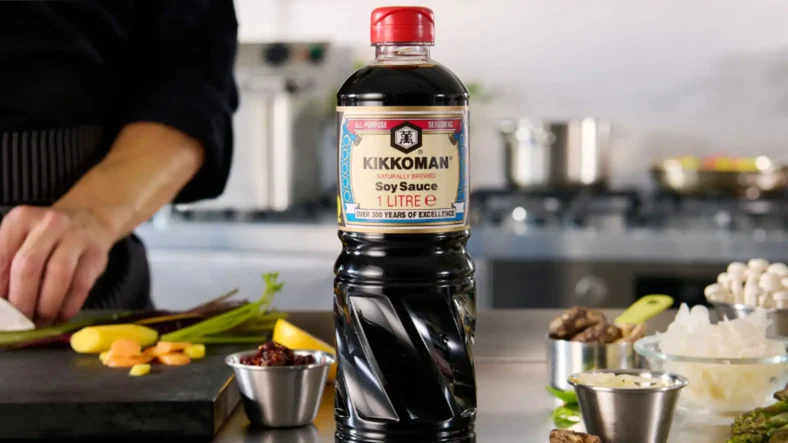
We all know that soy sauce is an integral ingredient in Asian cuisine and Kikkoman, with a heritage dating back over three hundred years, can help with some recipe ideas to turn up the heat on your menu this Lunar New Year.
Sharing dishes – Asian Hot Pots
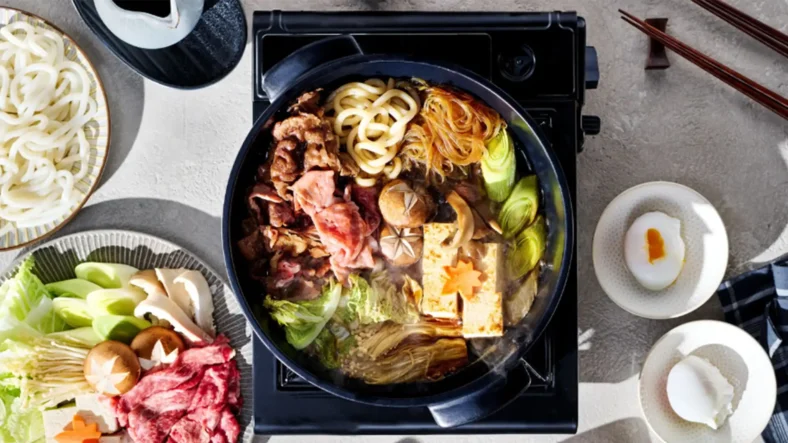
Fondue and Raclette have been around for decades but now there’s a growing trend especially among younger audiences with Asian hotpot. It’s the perfect opportunity to allow your customers to experience authentic Asian food culture and what better time to introduce it then Lunar New Year?
Originating in China, the hotpot, also known as fire pot, was designed as a warming meal for workers in the cold winter months, consisting of strips of meat and vegetables cooked in a broth. Over the last century each region and Asian country has introduced its own take on this popular dish, ranging from intensely savoury to fiery and everything in-between.
In Japan, Shabu-shabu and Sukiyaki are very famous types of hotpot. Sukiyaki is a sweet-savoury version with thin slices of meat and vegetables cooked in a rich soy sauce-based broth. The rich umami of 100% pure Kikkoman Naturally Brewed Soy Sauce is perfect for adding full-bodied depth.
Sukiyaki with beef and tofu – 10 portions
- 300 g tofu
- 10 fresh shiitake mushrooms
- 150 g fresh oyster mushrooms
- 180 g fresh enoki mushrooms
- 1 Chinese cabbage
- 3 leeks
- 125 g vermicelli noodles
- 250 ml Kikkoman Naturally Brewed Soy Sauce
- 250 ml mirin
- 250 ml sake
- 150 g sugar
- 2 ½ tsp toasted sesame oil
- 1kg beef, thinly sliced (2–3 mm)
- 5 tbsp vinegar
- 10 eggs
- 375 g cooked udon noodles
Cut the tofu into bite-sized pieces. Score the tops of the shiitake mushrooms with a cross. Roughly chop the oyster and enoki mushrooms. Cut the Chinese cabbage into 5 cm pieces. Slice the white part of the leek thinly on the diagonal. Prepare the vermicelli according to the packet instructions.
To make the sukiyaki broth, heat the Kikkoman Soy Sauce, mirin, sake and sugar in a saucepan until the sugar has dissolved.
Heat the sesame oil in a pan, add the beef and fry lightly. Add the leek and fry.
Deglaze with the Sukiyaki broth from step 2 and simmer for a few minutes. Add the vegetables from step 1, pour in the remaining broth and cook for about another 5 minutes.
Heat approx. a large pan of water to 90°C and add the vinegar. Poach the eggs. Divide the poached eggs between 10 small bowls along with the sukiyaki ingredients and the udon noodles. Serve.
The general term for hotpots in Japan is ‘nabe’ (the word “nabe” literally means “pot” in Japanese) and with a host of different ingredients and preparation methods from the regions there is plenty to choose from:
- Yose-nabe – with seafood, meat and vegetables and varying from region to region.
- Chanko-nabe – a protein rich mix of tofu, chicken and vegetables –
- Miso-nabe – a miso-based broth with a deep flavourful taste
- Kimchi-nabe – Korean inspired infusion of Kimchi and hot spices so offering intense heat.
- What’s needed to capitalise on the Hotpot trend
Electric hotpot cookers or portable induction plates are perfect. These allow customers to cook their food at the table, providing memorable sociable interaction. Special yin-yang pots enable you to offer two different broths such as a hot and a mild one to suit differing tastes.
Asian hotpots offer customers great variety and freedom in preparing and cooking food and are great for families as well as a night out with friends where individuals come together not just to share a meal but to enjoy a new food experience and have some fun.
While the broths are often mild at first, they deepen in flavour as different foods are added. Adding an umami-rich soy sauce at the beginning such as Kikkoman will ensure a delicious flavourful and aromatic broth will develop and will not overpower the other flavours.
Ingredients
Key is to offer good quality and authentic ingredients across all the elements.
- Meat – thinly sliced beef, chicken, pork or lamb
- Fish and seafood – prawns, mussels, squid, fish fillets
- Vegan ingredients – Tofu, glass noodles, mushrooms, pak choi, lotus root, water spinach
- Dips – Kikkoman Naturally Brewed Soy Sauce (Less Salt and Tamari Gluten-Free also available) and Kikkoman Sesame Sauce. Kikkoman Ponzu Lemon with its zesty flavour adds the perfect finishing touch.
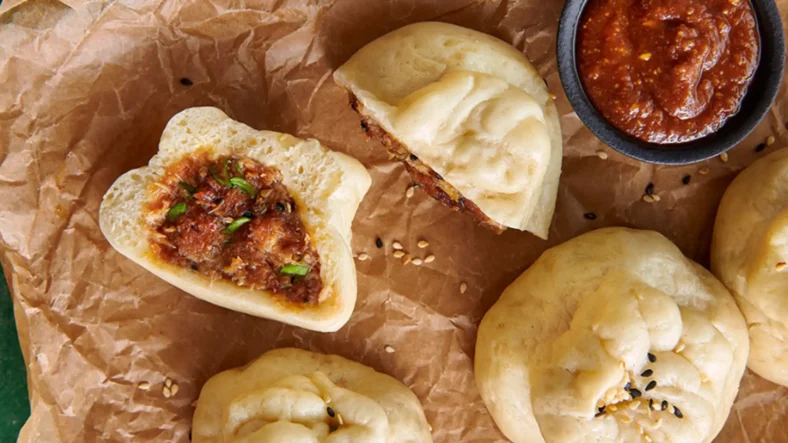
Bao buns
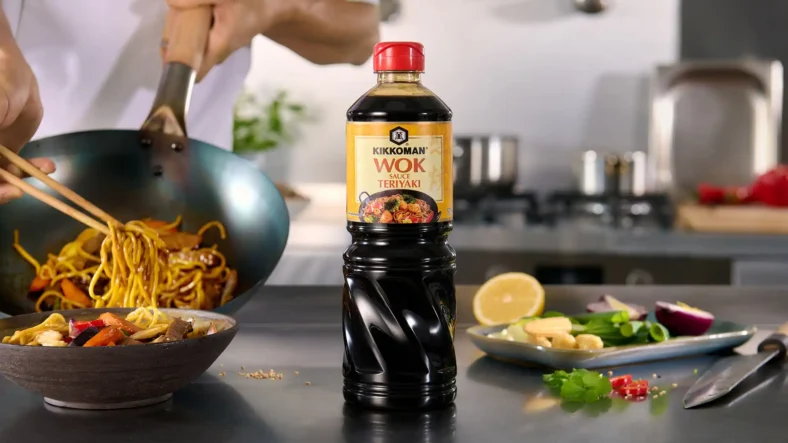
An alternative to hotpots but equally great for sharing are steamed Chinese bao buns. Some restaurants have devoted entire menus to these trendy dumplings. Any fillings can be used – even sweet dessert buns. In this version they’re filled with juicy crab meat and a hoisin sauce using new thick and creamy Kikkoman Wok Sauce – Teriyaki.
Asian Bao Buns with Crab Meat – 10 portions
Dough:
- 900 g wheat flour
- 20 g instant yeast
- 500 ml water
- 15 g sugar
- Baking paper
Filling:
- 4 tsp white sesame seeds, roasted
- 200 ml oyster sauce
- 50 ml lime juice
- 1 piece of ginger
- 3 tsp fresh coriander, finely chopped
- 1.2 kg crab meat (canned)
- 4 tsp chives, finely chopped
- Hoisin sauce:
- 200 g peanut butter
- 500 ml Kikkoman Wok Sauce – Teriyaki
- 200 g brown sugar
- 150 ml rice vinegar
- 30 g garlic, finely minced
- 2 tbsp sriracha sauce
- 3 pinches black pepper, freshly ground
Dough: Dissolve yeast and sugar in 37 degree water. Add in flour and knead for 10 minutes until dough is smooth and elastic. Leave to rise in a bowl covered with cling film in a warm place for 40 minutes.
Filling: Drain crab meat, add coriander, chives and ginger, then oyster sauce, lime juice and sesame seeds.
Hoisin Sauce: Heat Kikkoman Wok Sauce – Teriyaki and rice vinegar over low heat and stir to dissolve the brown sugar. Remove from heat and mix with Sriracha, garlic, peanut butter and black pepper until smooth.
Bao Buns: Dust risen dough with flour on the work surface and knead again. Roll out finger-thick and cut out circles 10 cm in diameter. Place the filling in the centre and roll the dough into small balls. Place a small piece of baking paper under each finished bun and steam in a bamboo basket or steamer for 4 minutes. Place in the steamer and cook for 4 minutes.
To serve: Pour hoisin sauce into a separate bowl and serve with steamed bao buns.