
If you’re looking for nostalgic comfort food but still want to be current, “red sauce joints” seem to be an emerging trend. These iconic, family-owned Italian-American restaurants are the perfect destination for a trendy meal that makes you feel right at home. Think checkered tablecloths, Chianti bottles dripping with wax, the low hum of Frank Sinatra, and a plate of spaghetti buried under an avalanche of tangy, slow-cooked tomato sauce. The kind of place you’d imagine Tony Soprano would dine in.
For a century, these restaurants were the soul of Little Italy in New York, Boston, and Chicago. But over the last five years, something unexpected has happened: the American red sauce joint has crossed the Atlantic and taken root in the United Kingdom.
From a pop-up in a London railway arch to a permanent Soho canteen, British diners are abandoning bland pasta for the bold, garlicky, no-apologies cooking of Southern Italian immigrants who made good in the New World. This is the story of that journey, and the essential ingredients that make it.
The Birth of the Red Sauce Joint
The term “red sauce joint” emerged in the early 20th century. Between 1880 and 1920, over four million Italians emigrated to the United States, the majority from Southern Italy and Sicily, specifically from Naples, Calabria, and Campania. These regions were poor, rural, and defined by cucina povera (poor kitchen): tomatoes, olive oil, garlic, dried pasta, and inexpensive cuts of meat.
When these immigrants arrived in cities like New York, they adapted.
Ingredients that were luxuries back home (like sugar and meat) became more accessible. The result was a sweeter, richer, more slowly cooked tomato sauce, often called “gravy” in Italian-American households. The sauce is simmered for hours with meatballs, sausages, or pork ribs. Landmark joints like Lombardi’s (New York’s first pizzeria, opened in 1905) and Patsy’s (opened in 1944 in Harlem) codified the style. By the 1950s, the red sauce joint was an American archetype.
The North-South Divide (Italy vs New York)
Here lies a crucial distinction that many UK diners miss, and it’s all about the soil and the soffritto.
In Northern Italy (Emilia-Romagna, for example), a traditional Bolognese ragu starts with a soffritto(finely chopped onion, carrot, and celery) and uses béchamel, not ricotta, in lasagne. It’s subtle, meaty, and almost brown.
But New York’s red sauce lasagne is a different beast. It is the direct descendant of Southern Italian immigrants, many of whom were from Naples. As one old-school New York chef put it: “Many of us stick to onion and garlic only. No carrot, no celery.” This keeps the sauce bright, acidic, and purely tomato-based, perfect for cutting through the heavy ricotta and mozzarella that define a New York-style lasagne.
However, modern NYC chefs and Italian-American families do sometimes add sofrito. Why? Two reasons: flavour and economics. A soffritto adds natural sweetness, balancing the acidity of a large quantity of tomatoes without adding sugar. But more pragmatically, with UK and global beef shortages pushing beef prices to an all-time high, sofrito acts as a budget-friendly “bulker.” It makes the meat go further. Another cost-saving trick? Use half beef and half pork mince, which is a good mock-up of veal.
How the Red Sauce Joint Came to the UK (Fact-Checked Examples)
The UK’s love affair with Italian-American food began around 2018-2019, driven by social media and a handful of pioneering chefs. Unlike France or Spain, the UK had no native “red sauce” tradition. But London’s insatiable appetite for New York nostalgia changed that.
Key examples:
- Lina Stores (London Soho) – Originally a 1940s Italian deli, its 2018 restaurant launch included a deliberate nod to Italian-American dishes like baked rigatoni with glossy tomato sauce. Critics noted the “New York energy.”
- Palazzo (London) – Opened in 2021 in a former strip-lit cafe on High Holborn, Palazzo is unashamedly a red sauce joint. Think veal parmigiana, spaghetti and meatballs, and that iconic bright red marinara ladled over everything. The Guardian called it “a love letter to the East Coast.”
- Bocca Di Lupo (Soho, 2008 – but evolved later) – While originally high-end Italian, by 2022 its more casual sibling, Gelupo, was selling red-sauce-style arancini. The tipping point was 2023, when TikTok videos of “New York lasagne” poured over with extra sauce racked up millions of views in the UK.
- A. Wong’s “Italian-American” pop-up (2024) – Even Michelin-starred chefs got in on the act, running sold-out nights dedicated to red sauce classics, proving the trend had crossed from niche to mainstream.
The “Life Raft” Lasagne: Why Chefs Love It
In busy New York kitchens, the lasagne is pre-baked, cut into perfect squares, and reheated to order. This dish could be affectionately known among chefs as the “Life Raft Lasagne”, because when the kitchen is sinking under a wave of tickets, it’s the cheque that makes everyone smile. No last-minute layering, no bechamel panic. Just reheat, plate, and send.
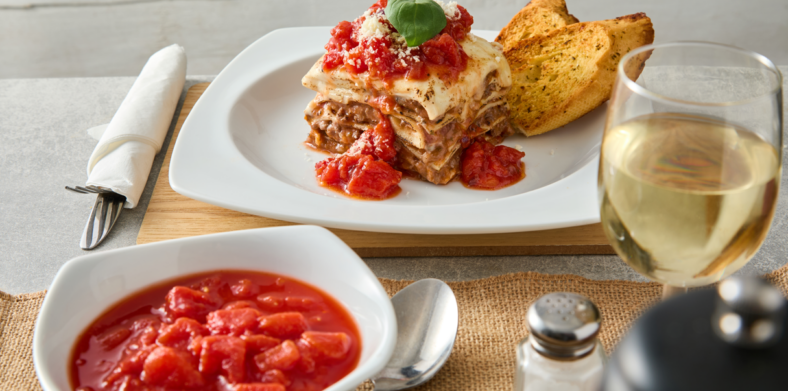
The method is brilliant: to serve, each square is refreshed by pouring a bright, uncooked (or barely cooked) marinara sauce over the top. This prevents the lasagne from looking dry after reheating and gives it that vibrant acidity and sweetness to cut through the cheese. New Yorkers call this the “Two-Sauce System”, one sauce in the bake, one sauce on top.
Crucially, this style is incredibly Instagrammable. The clean square, the glossy red pour-over, the heavy dusting of Parmesan, it’s the kind of dish customers film for a “cheese pull” or a “sauce drip.” That gives your kitchen free marketing with every order.
And here’s a hidden health bonus: letting pasta go cold and then reheating it turns its carbohydrates into more resistant starch, lowering the glycaemic index. This process makes it better for diabetics or anyone looking to reduce their carbohydrate load.

The Sales Guide to the Plum: Your Essential Red Sauce Ingredients
None of this works without the right tomatoes. The volcanic soil of the Campania region in Italy is famous for producing sweet, low-acidity tomatoes. The mineral-rich volcanic ash from Mount Vesuvius reduces the need for added sugar or sofrito for sweetness. This is the terroir that built the red sauce joint.
For your kitchen to capture authentic New York style, you need these three products:
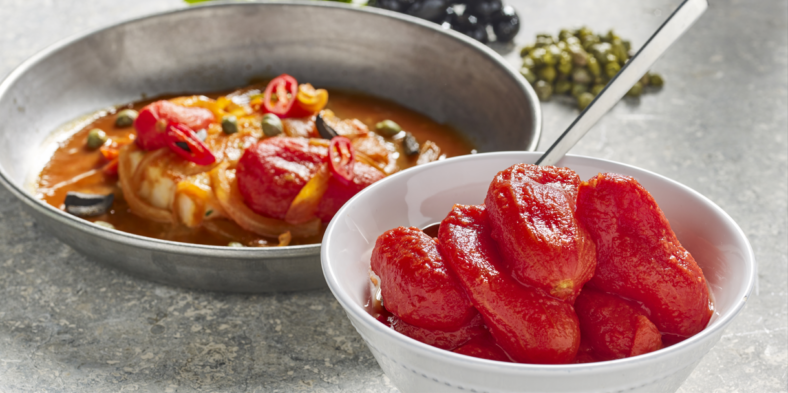
- Sweet Italian Plum Tomatoes (Whole Peeled): The ideal ingredient for recipes which call for whole tomatoes. Sourced directly from the Campania region, these tomatoes are peeled, blanched, and supplied in a juicy tomato sauce ready for you to add your chosen flavours to. Crush them by hand for a rustic marinara or leave them whole for slow-cooked Sunday gravy.
- Italian Peeled and Chopped Tomatoes: Harvested from the vine, these provide the perfect base for a wide range of recipes, from bruschetta to pasta sauces. Sourced from Campania – the heart of the Italian tomato processing industry. Use these for your lasagne’s bottom layer or to bulk out a soffritto.
- Tomato Paste: The essential ingredient to add richness to any recipe. This tomato paste, made with Italian tomatoes from the Campania region, adds authenticity and intense tomato flavour to your dishes. A tablespoon fried in olive oil before adding your liquids will give your red sauce the deep, savoury backbone that defines a great New York joint.
The Golden Ticket
Whether you are making a New York-stylelasagna (no bechamel, plenty of ricotta, and that two-sauce finish) or a simple spaghetti with meatballs, these tomatoes are your foundation. Using our CHEF Approved tinned tomatoes, you won’t need to add sugar or rely on a sweet vegetable sofrito. The volcanic soil does the work for you.
The red sauce joint has finally arrived in the UK. Now, with the right ingredients, you can serve the life raft that every busy kitchen needs: a perfect square of lasagne, bathed in glossy Campanian red. That’s not just a meal. That’s a cheque you smile at when the kitchen is sinking.